

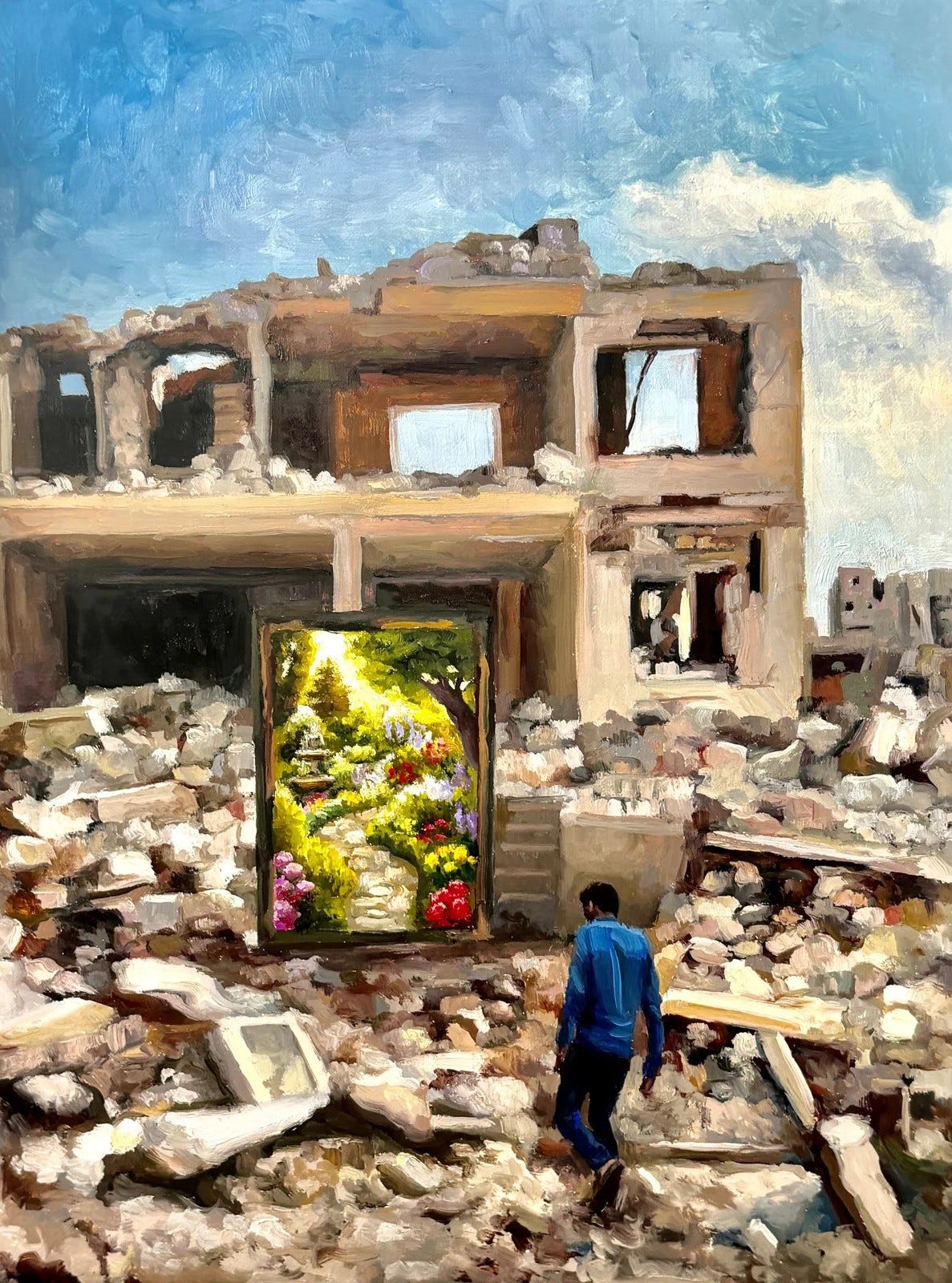
Port to Paradise by Safia Latif
One of the most common motifs in the literature on tazkiya is the transformation of the bitterness of the struggle against the nafs into a sweetness that comes about from the process of self refinement. In one qasida, a spiritual seeker finds a group of gnostics and inquires as to how he may enter their sacred precincts. Their response embodies the process of spiritual purification:
Drink the chalices of colocynth
And the bitter shall become sweet
Endure this arduous state
For the remainder of your life
You will become an ingot of gold
Purified, amongst all of humanity
It is not that the substance of tazkiya is ever transformed such that it becomes more palatable; rather, one’s own perception is transformed through a conscious reframing of the bitterness. Those who fail to embark on this personal journey will never taste the sweetness of transformation, regardless of how frequently they may drink from the bitter chalice. Such a person experiences the worst of both worlds: they neither cease tasting the bitterness nor ever gain spiritual refinement from it. Worse yet, however, are those that never attempt the journey, having tasted neither sweetness nor bitterness, and existing in a spiritual purgatory
For three years, the entirety of the umma has been served with the bitterest of drinks: scenery of never-ending torrents of blood, desecration of the First Qibla, rape of our prisoners—amongst other calamities. As with the personal process of tazkiya, umma-wide responses to this bitterness have largely fallen into one of three categories.
The first of these responses are those who simply pretend that the drink does not exist: if a child is dismembered in Gaza and there is no one to hear them, were they really dismembered? This group specializes in the obfuscation of perhaps the most straightforward questions of moral clarity. Rather than confronting the evil enshrouding our umma, they are pleased with dealing in the merchandise that Allah (SWT) abhors: “Indeed, Allah Almighty loves noble, high, and lofty matters and their most honorable aspects, and He abhors trivial, base, or petty matters.”
For some, such merchandise is recycled aqida debates; for others, it is Jane Austen. Members of this group come in all flavors: Sufis and Salafis, reformists and traditionalists, seculars and “jihadists”. The common thread linking this mis-match of ideologies is their misguided belief that their refusal to acknowledge the bitter drink means that it simply ceases to exist, not realizing that it continues to gush regardless—corroding their throats and exuding a bloody stench whenever they open their mouths. This darkness of betrayal taints their words and serves as a call to action for the umma: shed the merchants of triviality; do not waste your energy on the willfully blind; “Beware of discord that harms not only the wrongdoers among you” but also those who legitimize them, platform them, and echo their calls.
The second group encompasses those who acknowledge the bitterness but go no further; they see they see the literal rivers of blood in Gaza and very well may sympathize, but material wealth, status, power, and other adornments of the dunya restrain them from ever going beyond being mere witnesses to the slaughter. Members of this group do not get to enjoy the delusion of the former: they taste the bitterness and know that every additional drop of it brings them ever-closer to adopting the practice of the first group. The never-ending torment of daily bitterness, coupled with the agony of knowing they should be doing something, produces a sort of split personality disorder: one hour of the day, these individuals shed tears over a video of a young girl crying over her father’s corpse. Seeking to atone for their incapacity in stopping such scenes, they send a donation to a humanitarian organization before swiftly returning to a career built on the explicit objective of producing more bereaved Gazan children.
The third group embarks on a journey that only ceases at their final breath: consciously opting to recalibrate their receptors, such that the bitterness does not invoke a response of passive witnessing—or worse, a non-response only attributable to an utterly hardened heart—but of action. Each atrocity witnessed is fuel for a genuine change in one’s lifestyle—not merely in the context of external activism, but of one that stems from internal self-accounting: What does my existence beget for this drowning umma? Am I an added burden—a claimant to the ship of Submission who is the first to abandon it when it calls for my sacrifice? What is the end goal for this life that I lead—what is it metric of success?
These questions are not meant to be rhetorical; the process of enduring the bitterness entails perpetually interrogating our nafs with such uncomfortable questions, not seeking to shame ourselves, but to constantly ensure that we have not unconsciously normalized the scene of our sisters’ and brothers’ scattered limbs and ensuring that every waking decision we make is guided by a desire to cease the slaughter. Only then can one taste sweetness amongst the oceans of bitterness—through knowledge that one not only attained personal tazkiya, but served as part of the larger tazkiya of the umma, a process through which the narratives of the treacherous were sidelined and narratives of resistance, justice, and morality were revived.
Let this anniversary serve as a time of self-accounting. Three years on, this umma cannot afford any one of us to be in any group but the third.